
FERQO SOLUTIONS
Smart Lighting & Energy Management
Ferqo's smart lighting system automates when and how lights run, and records the energy each circuit uses. Consumption outside operating hours switches off without anyone walking the floors, and the data it produces supports carbon reporting.
OVERVIEW
Lighting control, schedules, and energy data in one management workflow
Ferqo creates a centralized lighting management model for offices, hospitality properties, and multi-site commercial environments. Lighting control, schedules, and energy data can be managed through the Ferqo app and portal, or integrated into existing enterprise systems through APIs.
COMMON CHALLENGES
Energy and labor costs that scale with every site
When lighting is managed separately on each floor and at each site, energy costs and manual workload stay difficult to see.

Energy waste outside operating hours
Lighting left on outside operating hours creates an invisible energy cost that becomes harder to ignore as the number of sites grows.

The labor cost of manual lighting checks
After stores close or offices empty, staff still have to inspect floors and switch off lights manually. The time cost increases with every additional site.

Carbon reporting requires reliable energy data
Organizing and tracing electricity data is becoming a basic requirement for operational management and sustainability reporting.

Construction concerns can delay smart upgrades
Concerns about rewiring, construction, and operational disruption often delay smart-building upgrades in existing properties.
ONE VIEW, EVERY SITE
Visualize energy data and identify where improvements matter
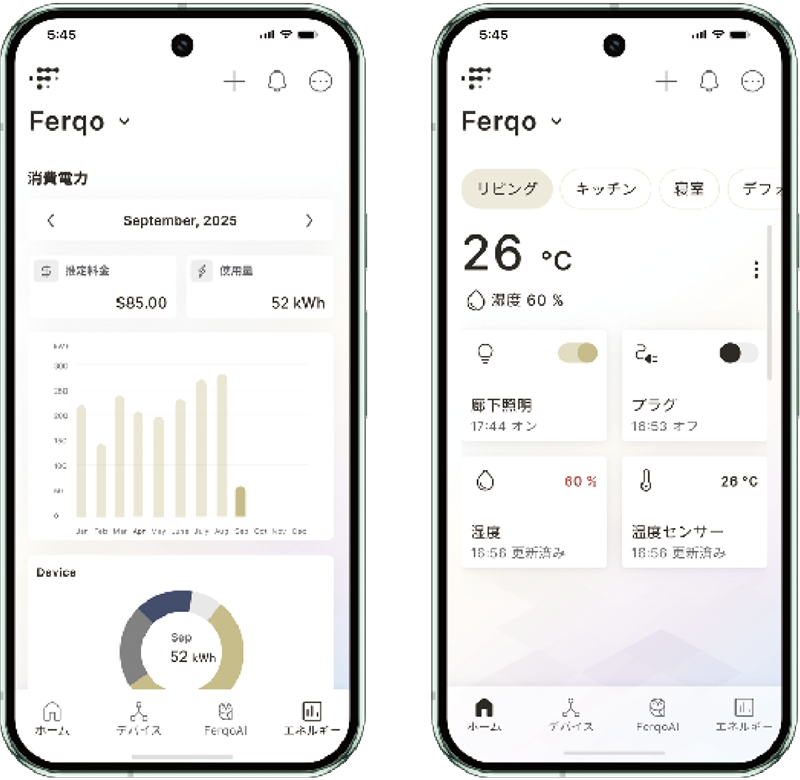
The management portal tracks energy trends across floors and sites, helping teams identify high-consumption periods and unusual locations while providing a data foundation for energy strategies and ESG reporting.
Interface shown for functional reference. Fields and permissions are configured by project.
MOBILE & DESKTOP
Keep familiar on-site controls while centralizing management
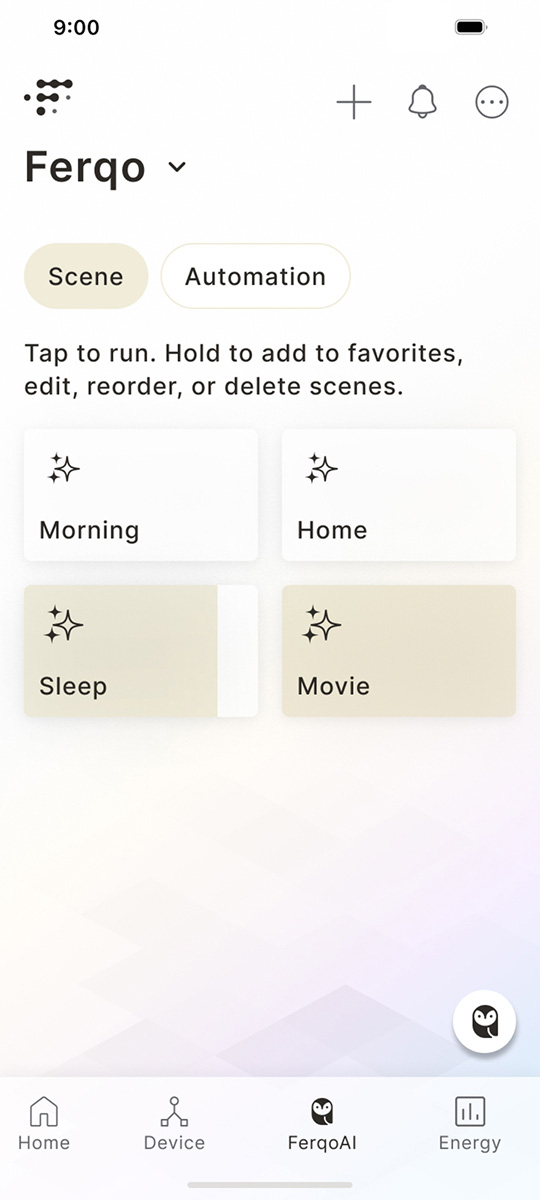
On-site teams can continue using physical switches, while managers configure schedules, scenes, and multi-site controls through the app and management portal.
SCENE
Scene control
Run scenes for opening, closing, or specific zones.
SCHEDULE
Schedule automation
Apply lighting rules by weekday, holiday, and time period.
CAPABILITIES
Scalable lighting management from individual circuits to multiple sites
Use schedules, scenes, energy data, and API integration to reduce on-site workload while preserving system flexibility.
EXPERIENCE
An operating experience that fits existing habits
Retain familiar physical switches while adding a tailored app and management portal.
OPEN API
Connect existing enterprise systems
Connect lighting controls to ERP, property management, or administration systems without requiring teams to adopt another standalone platform.
AUTOMATION
Schedule and scene automation
Set schedules and multi-circuit actions around operating hours, including coordinated shutoff at designated times.
ENERGY
Energy data visualization
Review energy trends by floor and site to identify high-consumption periods and unusual locations.
MULTI-SITE
Centralized multi-site management
Run opening and closing scenes across all sites to reduce shutdown and inspection time.
PHASED ROLLOUT
Phased deployment
Operate alongside traditional switches and deploy by floor or zone without interrupting operations.
FLEXIBLE ARCHITECTURE
Open APIs that connect to existing systems instead of replacing them
The Ferqo platform can connect with existing ERP, property management, and administration systems. Deployment can be phased by floor or zone to match operational priorities and preserve room for future expansion.

APPLICABLE DOMAINS
Environments where Ferqo is deployed
Applicable domains include system integrators, property management teams, and multi-site commercial environments.
Occupancy, door and window sensing, and energy monitoring can be added over time to support a more complete site-management model.
Frequently Asked Questions
What is a smart lighting control system?
A smart lighting control system connects lighting fixtures to a network so they can be managed centrally, setting scenes, schedules, and remote switching from an app or dashboard while recording energy consumption at the same time. Compared with conventional switches, it automatically shuts off consumption outside operating hours and reduces the labor cost of walking the floors to turn lights off.
Can smart lighting be installed in an existing building?
Yes. Ferqo supports phased deployment. You can start with a single circuit or a single floor and expand gradually to the whole building and then to multiple sites. Familiar physical switches remain available to on-site staff, which lowers both the engineering risk of retrofitting an existing building and the disruption to daily operations.
How does smart lighting actually save energy?
Mainly in three ways: scheduling stops fixtures running outside operating hours, scene control matches lighting to how a space is actually used, and energy visualization identifies the highest-consuming periods and the outlier sites. The point is that managers can find what genuinely needs fixing from the data, rather than guessing at where the waste is.
Can the energy data be used for carbon accounting or ESG reporting?
Yes. The system continuously records electricity consumption by floor and by site, providing traceable data to support Scope 2 greenhouse gas accounting and the electricity figures in ESG reports, so you are not left reconstructing estimates after the fact.
Can Ferqo integrate with the systems we already use?
Yes. Ferqo provides an open API for connecting to your existing management systems and workflows. The platform is designed to work alongside what you already run rather than replace it, which suits organizations that already have a BMS, property management platform, or internal systems in place.
DISCUSS YOUR PROJECT
Plan the right deployment for your site
Every site has different operating conditions and requirements. Share your site information, and our team will follow up with an initial deployment recommendation.